For developers
 Roadmaps automatically update as issues are closed and PR merged
- Access roadmaps directly from GitHub
- Get visibility into how your projects align with larger organizational goals
Timeline
Roadmaps give a high-level, timeline-style overview of all your team’s epics and projects. Align work being done in GitHub with larger organizational goals and sprints in real-time.
Provide clients, leadership, and collaborators with complete visibility into your team's progress. Know what's releasing, when, and which projects are and aren't on track.

Give clients, executives, contractors, and any collaborator a birds-eye view of all your team’s epics, including work being done both inside and outside GitHub.
Easily toggle between your portfolio roadmap and individual project roadmaps. View epics in a timeline view by month, quarter, and year.
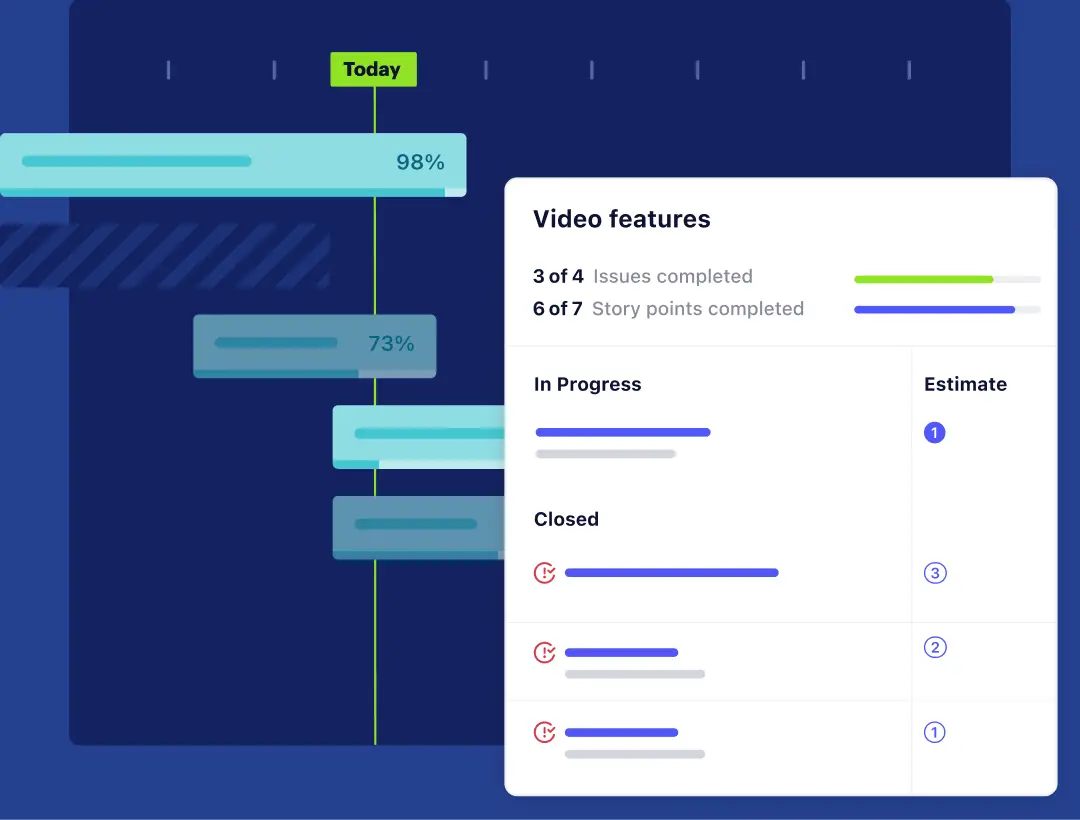

Use Burndown Charts to see how much progress your team has made in a sprint and how much work is left to complete it. Identify work plateaus and trends in progress.
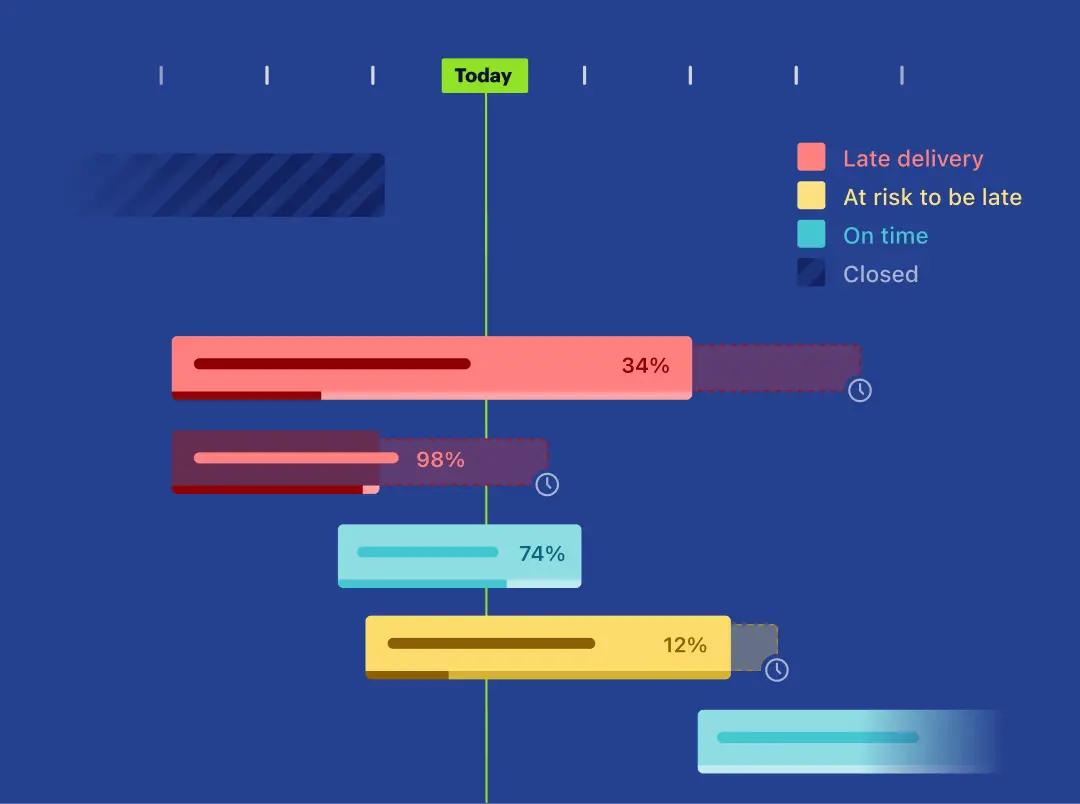
Zenhub uses your team’s velocity to identify and color-code which projects are at risk of missing their deadline and give you realistic project end-date predictions.
testimonials
“Zenhub gave the entire team a new, great way to work, without having to leave GitHub. This affected the way the entire team moved — the level of communication and transparency was elevated.”
Read the story
Jessica
Program Manager, Behance
Why Zenhub
Roadmaps automatically update as issues are closed and PR mergedAccess roadmaps directly from GitHubGet visibility into how your projects align with larger organizational goals Get real-time views on the progress of projectsIdentify projects at risk of missing deadlinesGet a streamlined view of both development work and non-development work
additional zenhub features


glossary
Roadmap
Roadmaps provide a long-term vision of all of the ongoing projects that are currently planned for the immediate future. Roadmaps can give a visual of how your product will evolve over time and what major milestones contribute to that evolution.
Issues
“Issues” in agile project management are another word for smaller tasks or individual units of work. In Zenhub, issues best suited to developers are GitHub Issues and issues best suited to non-technical team members are Zenhub Issues.
Epics
Epics in agile project management are groupings of issues that are related to one another. If an issue has multiple elements to it, it’s best to break it down into multiple issues grouped into an Epic.
Sprints
Sprints, in agile project management, are defined periods of time in which a software team commits to an assigned group of issues to work on. Sprints are usually 2-4 weeks long.
Need Help?
Zenhub roadmaps are a visual representation of the projects and epics your team is working on in a timeline view.
If your team has Zenhub sprint planning set up in your Workspace, sprints will appear at the top of your roadmap to give you a visual of where projects fall across ongoing sprints.
At the top of Zenhub’s roadmaps, you will see a timeline that shows your sprints on it. Aligned with this timeline is all of your Workspace’s Epics and Projects, aligned in order of when they start and finish. Epics and Projects are also color-coded, so you know which projects are at risk of being late.
If your team is using Zenhub issue estimates, over time, Zenhub will collect data regarding how long it takes you to complete a certain number of story points. This metric is called “velocity,” and Zenhub uses this to determine whether or not a project is on track for completion by its deadline.